McIntosh C28 Solid State Vintage Preamplifier - Serviced
General:
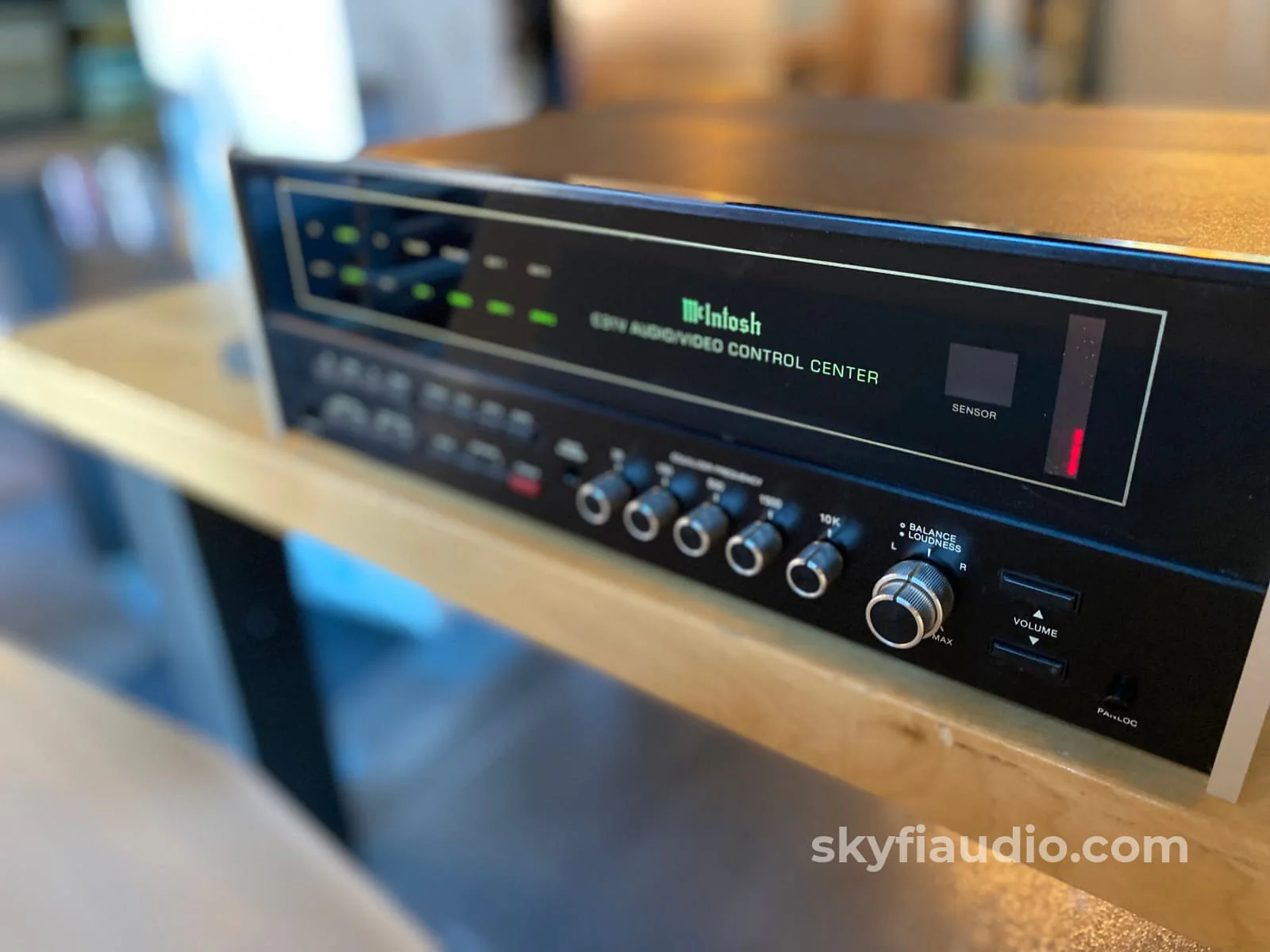
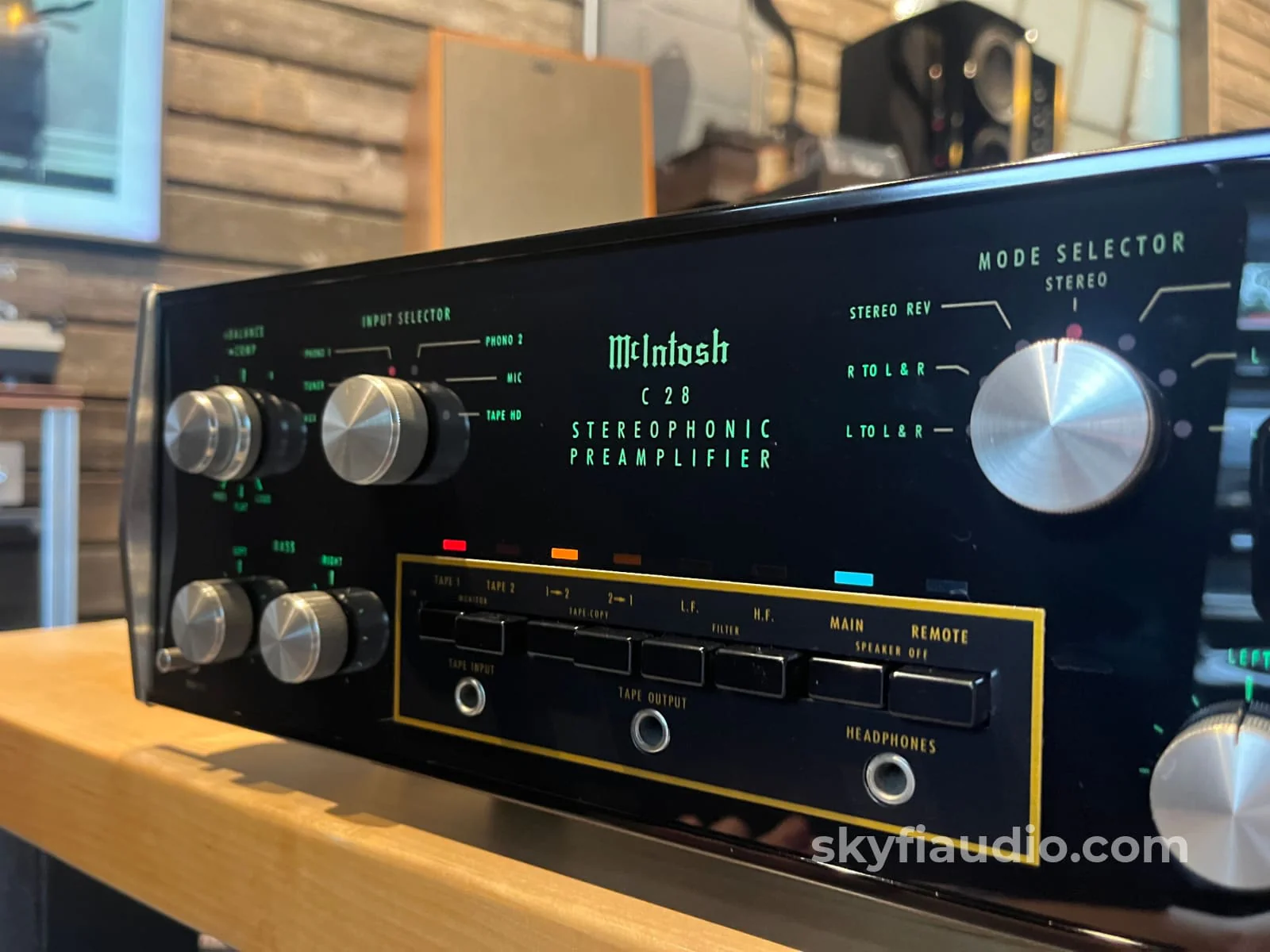
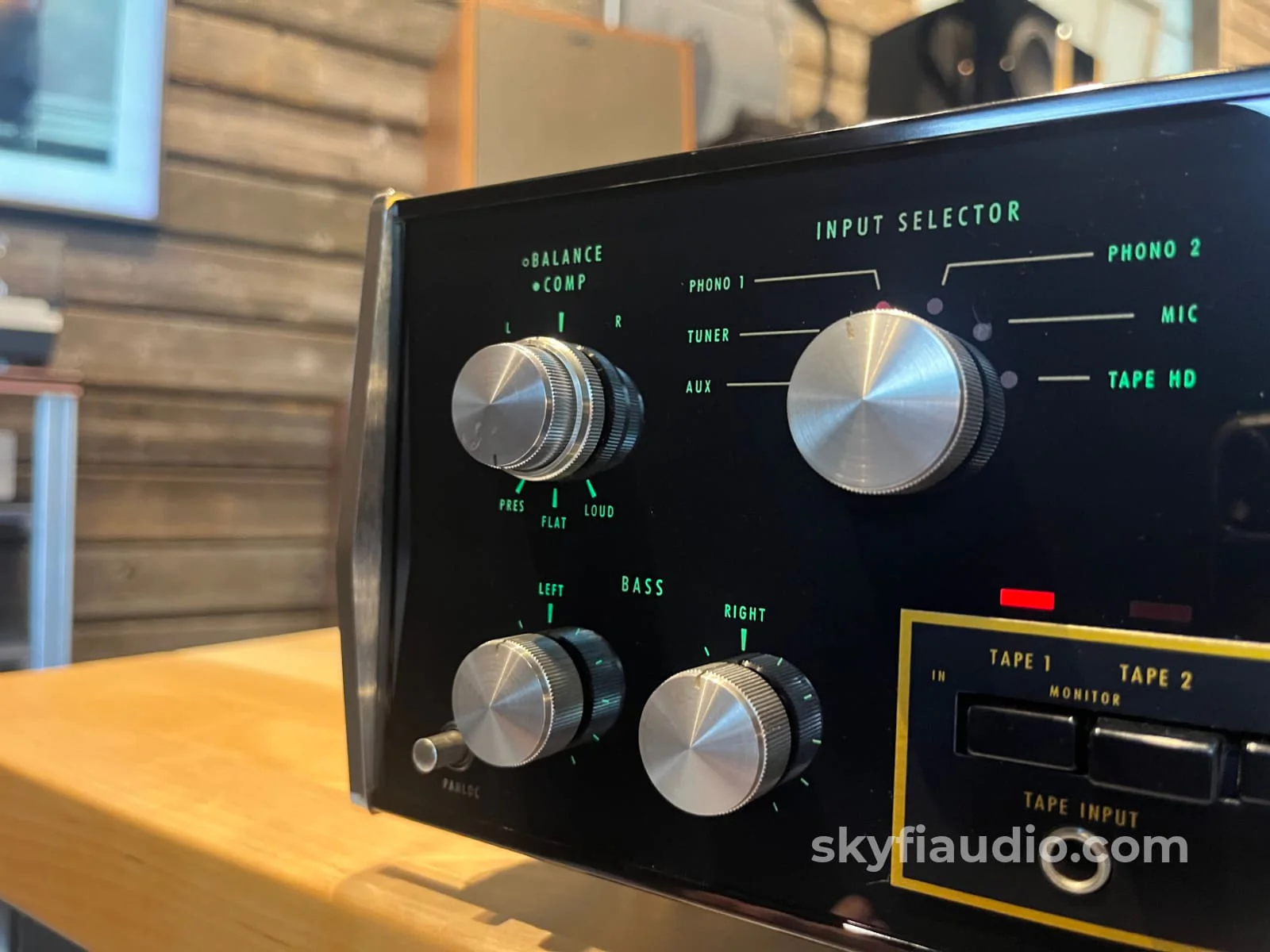
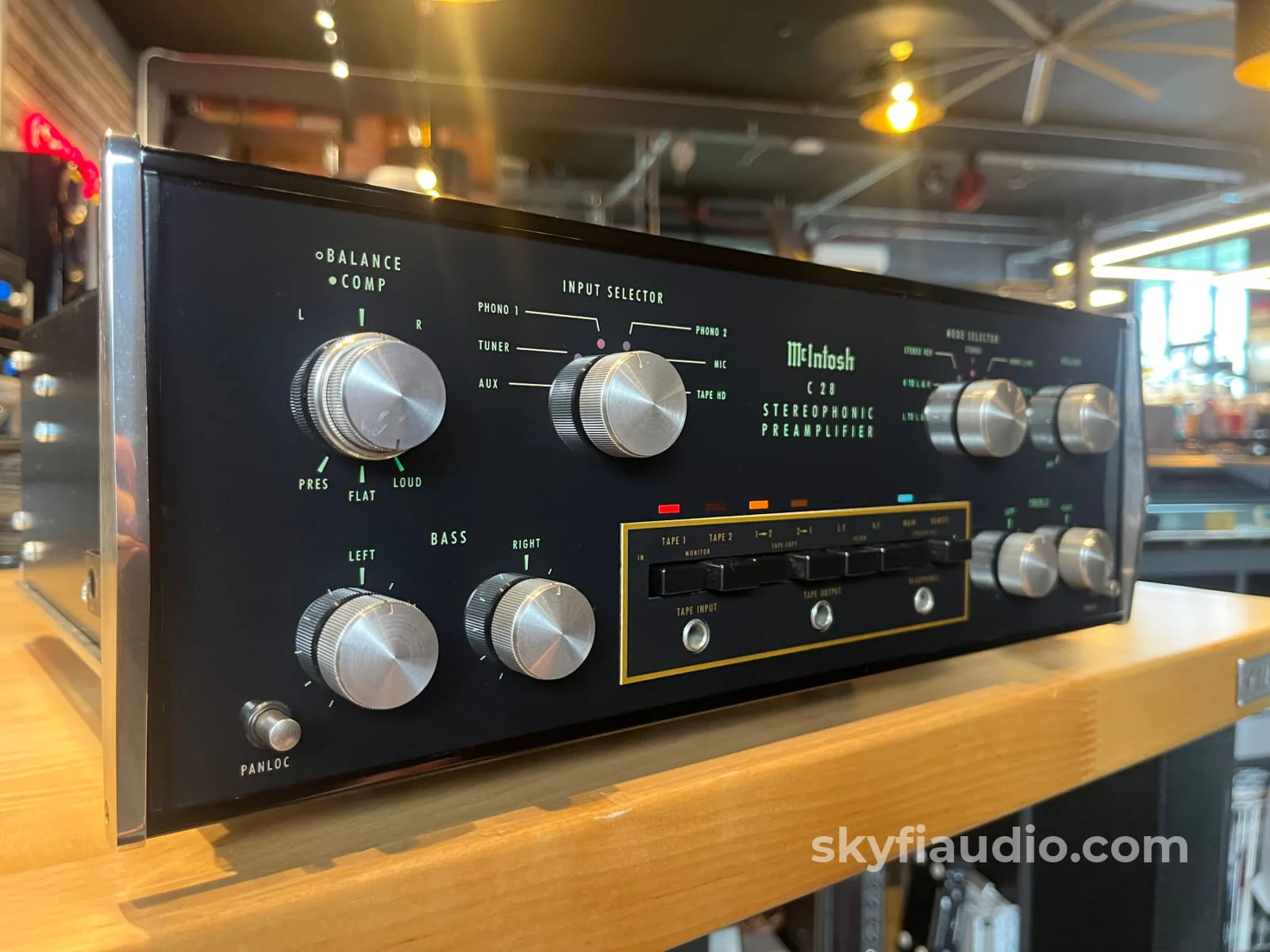
The C28 solid state preamplifier is a true McIntosh classic. It features the McIntosh vintage look and feel including a backlit glass faceplate, large polished control knobs, and satisfying push-buttons with LED's.
Controls are just what you need - an input selector, volume, balance, plus tone controls. The individual left and right channel tone controls are a nice plus.
Cosmetically it presents very nicely. The replacement glass faceplate is clean and the paintwork is without any deep scratches, rust, or wear.
The C28 is a crowd favorite from this era. It's easy to service, has a low noise floor, great vintage looks, and every feature we would want.
This particular C28 also has been serviced in 2023 giving the next owner piece of mind for long term reliability. The buttons and knobs feel super nice without any scratchiness. It sounded great in testing and at our bench.
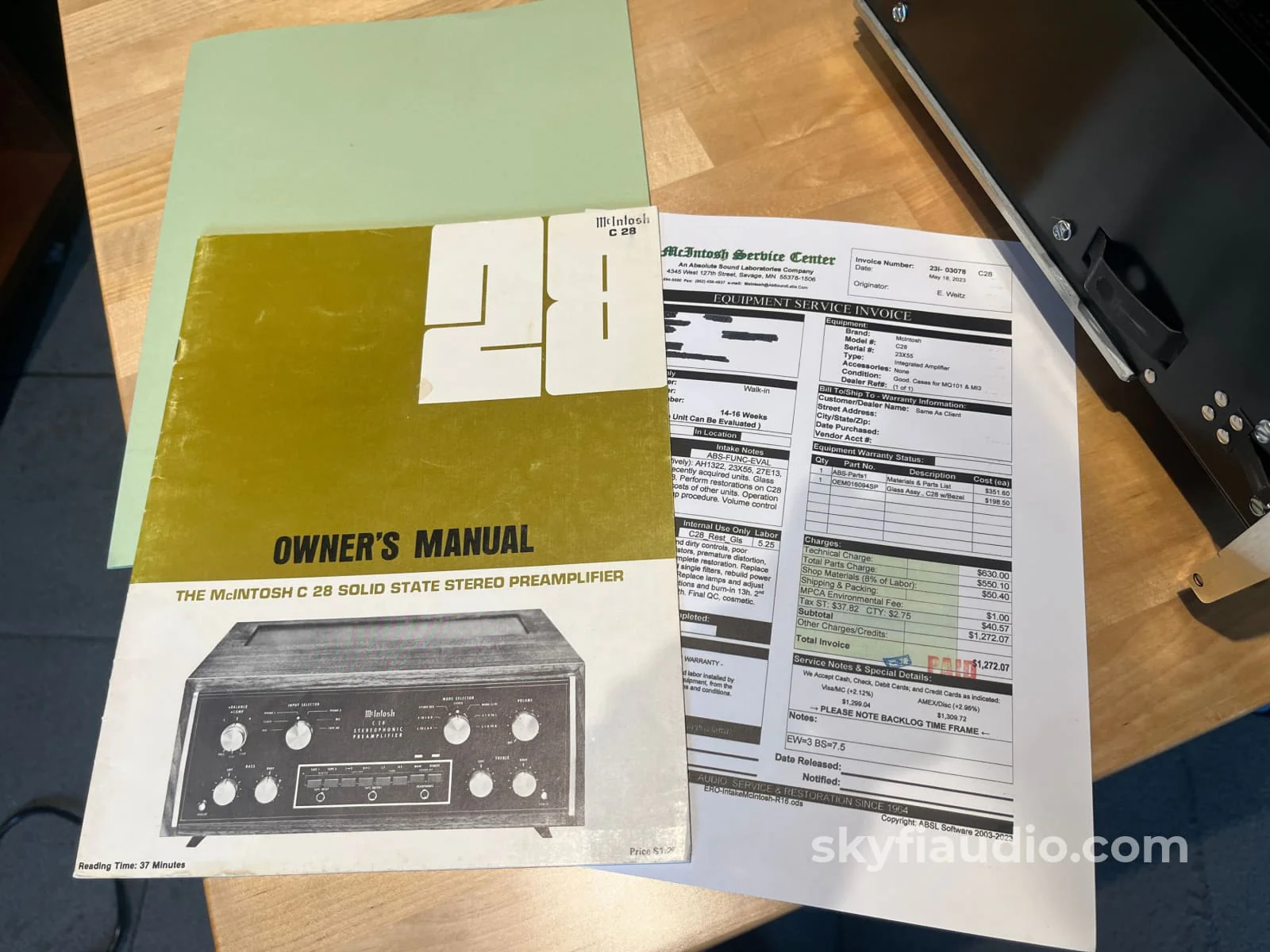
We also ordered a fresh C28 double-shipping carton from McIntosh to ensure safe travels to its new home. Included with the unit will be its original print manual.
SkyFi Cosmetic Notes:
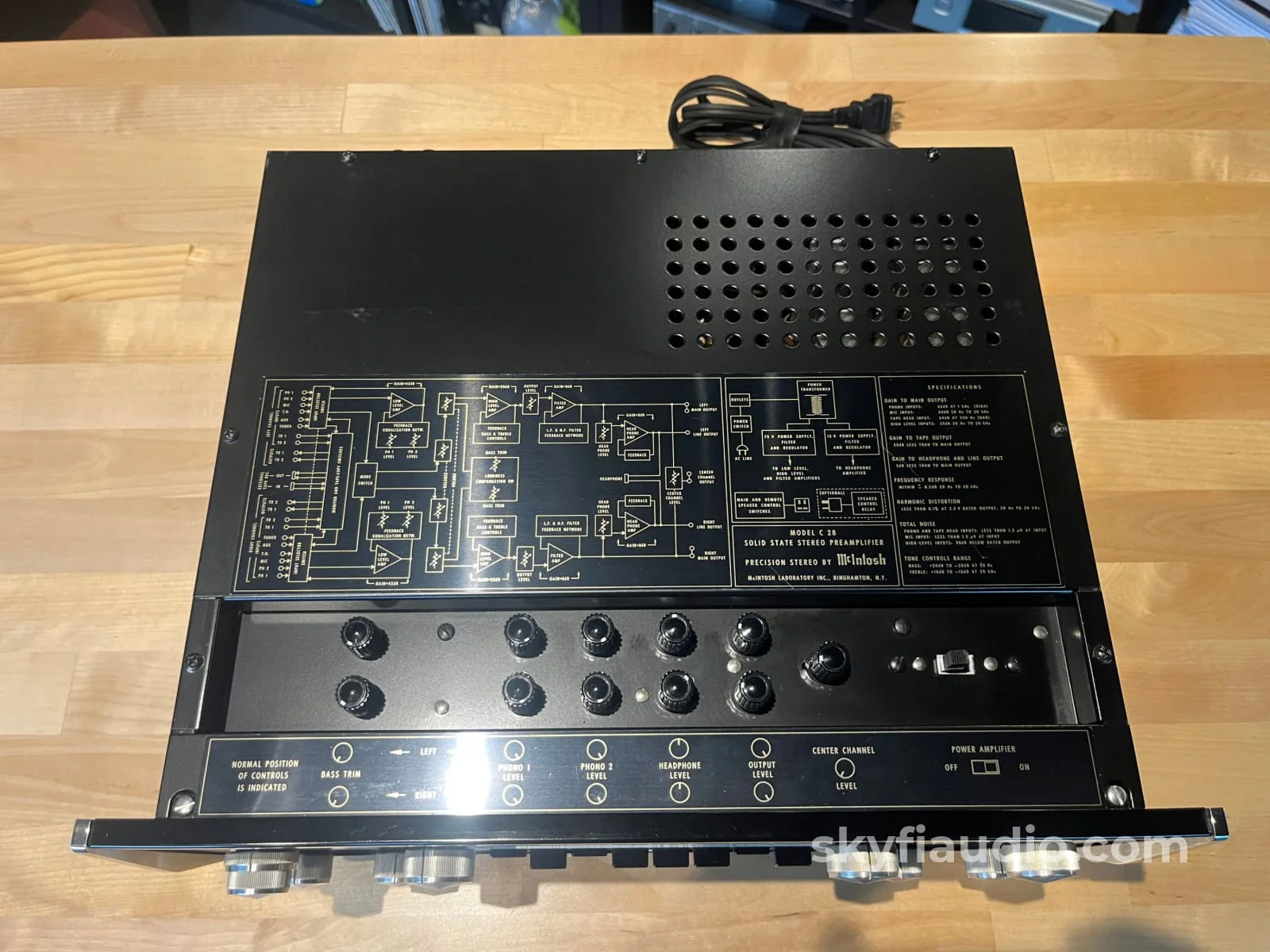
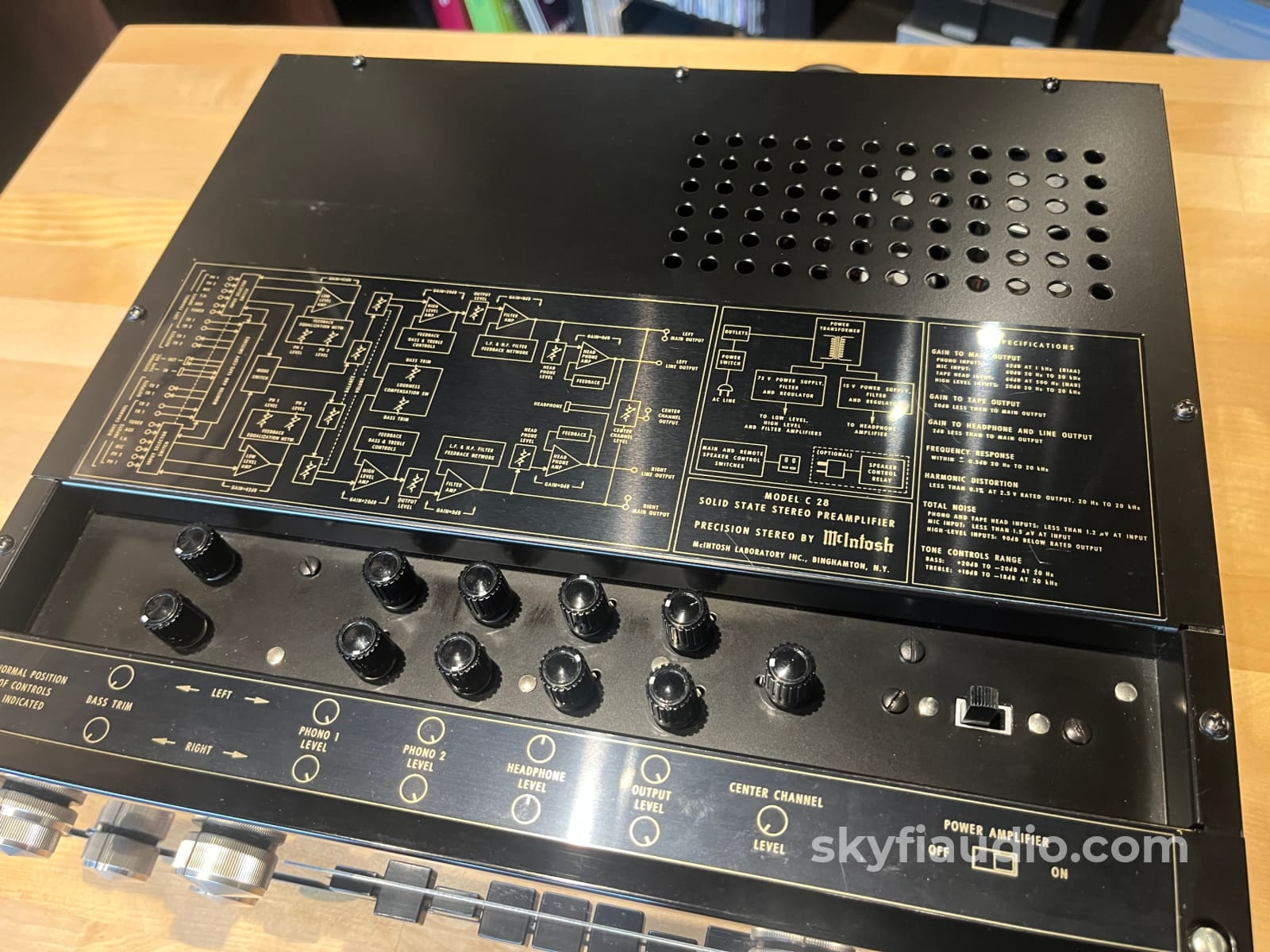
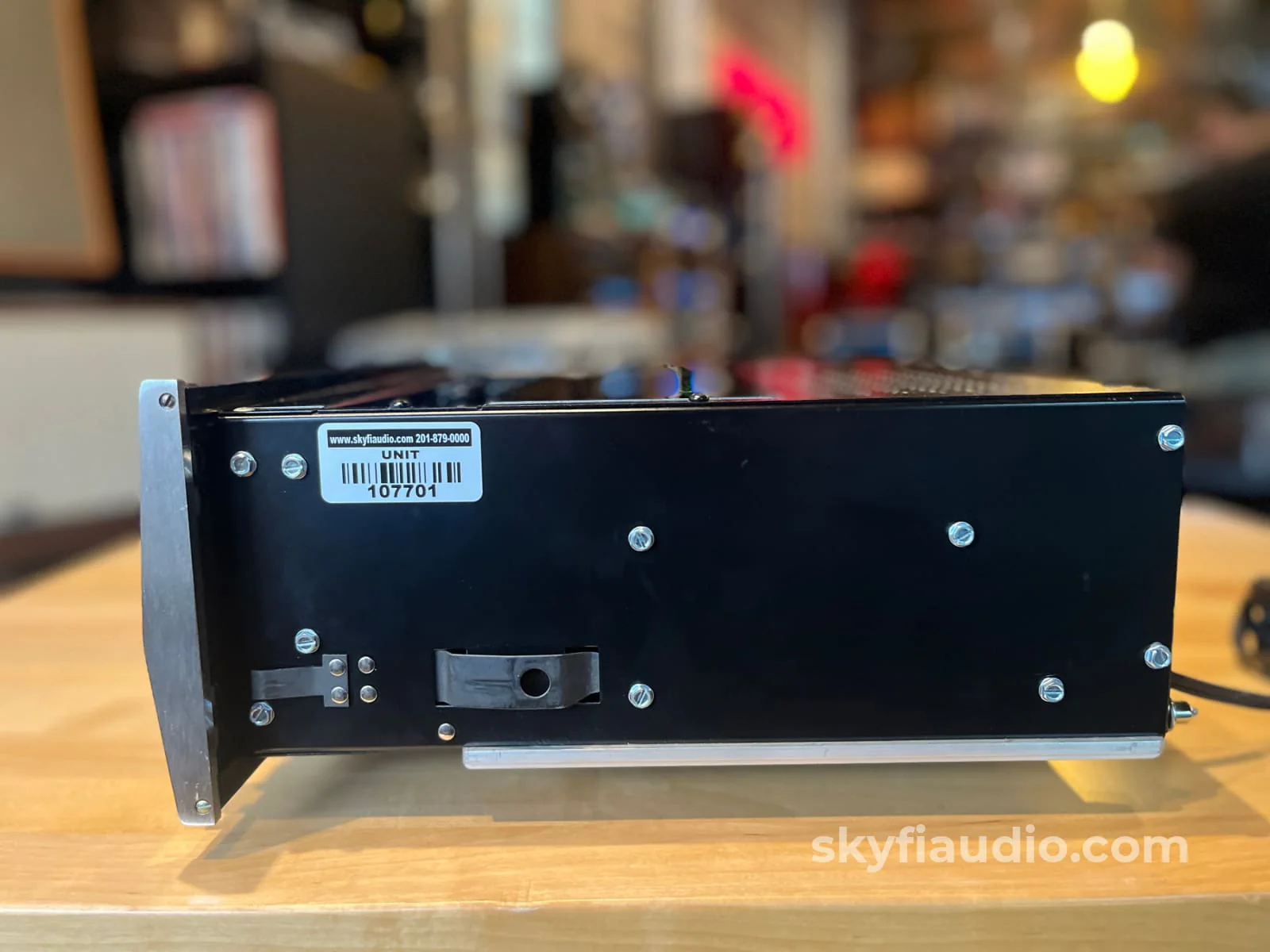
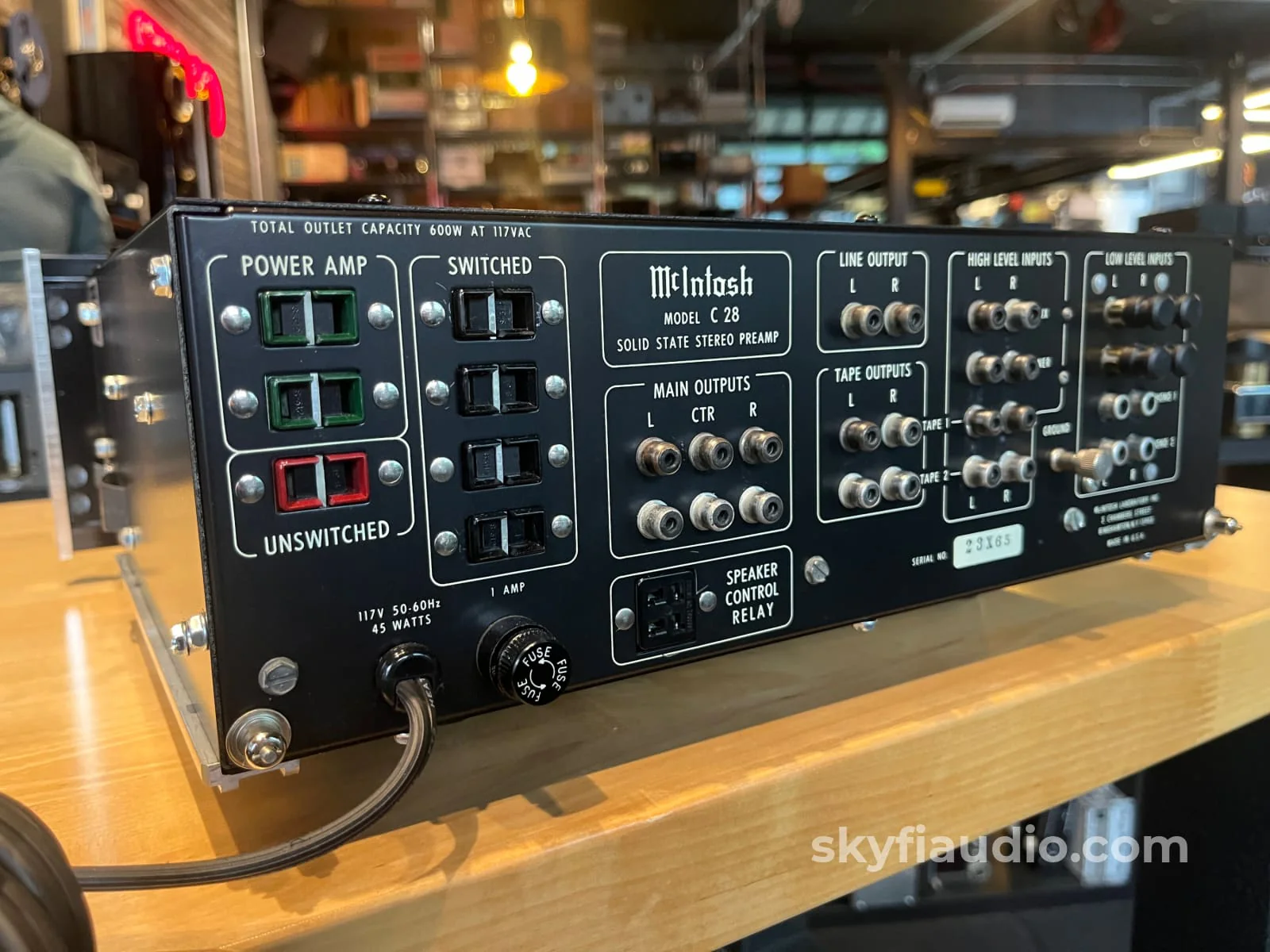
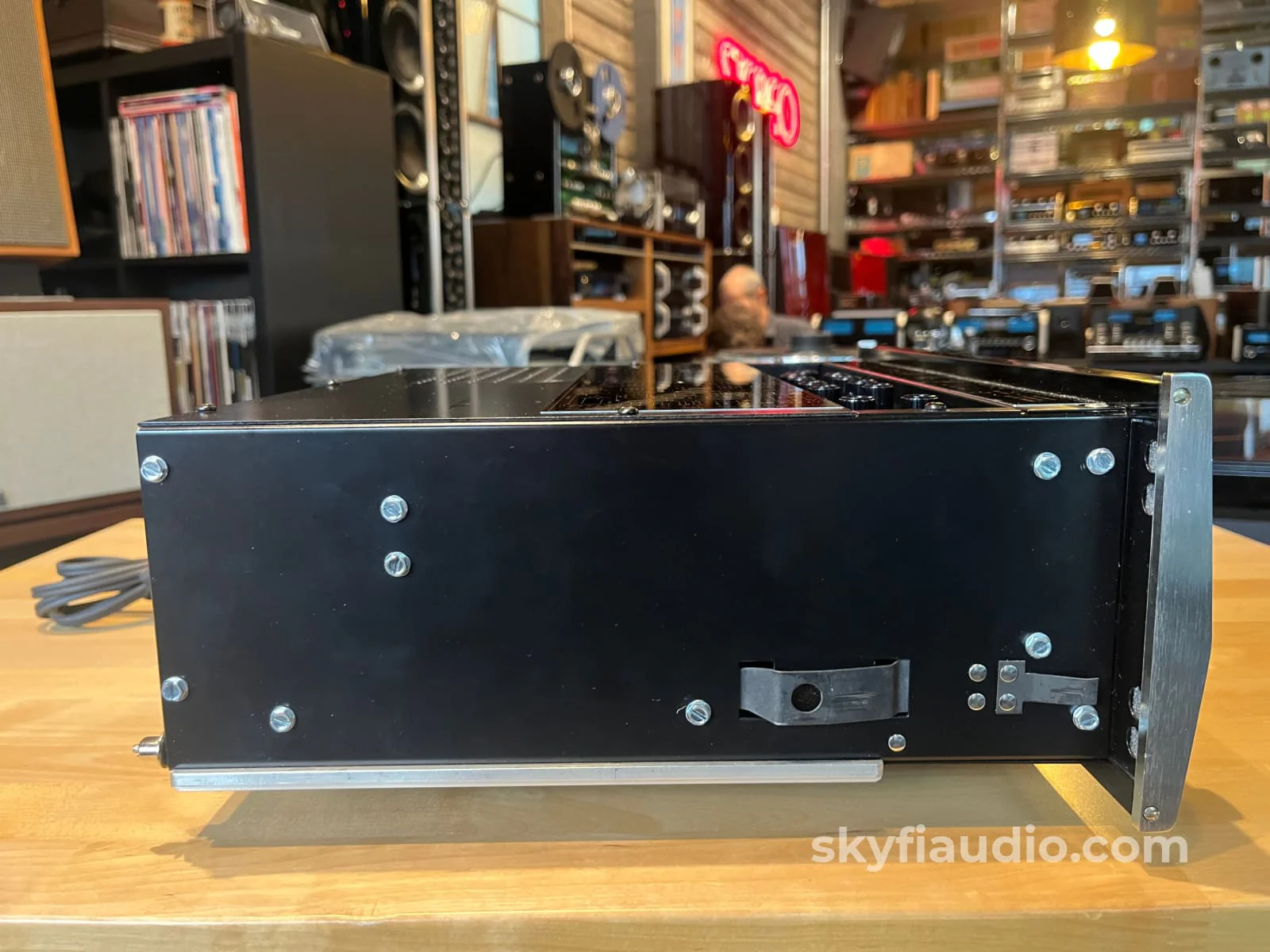
The glass on this C28 has been replaced. This affects the light diffusion slightly and changes overall the look of the front panel. The illumination has been converted to LED to improve light propagation with the new glass. The chassis is in very good condition overall besides some marking on the top cover. The RCA jacks are slightly tarnished.
SkyFi Technical Notes:
This C28 was serviced by Analog Sound Labs in 2023. The service included a replacement of all electrolytic and aging film capacitors on the PC Boards. Select power supply caps were replaced, controls cleaned, and any noisy transistors replaced. This unit has also received a replacement front glass panel and a new power cord.
All features were tested in our lab. The only notable issues that we identified was a channel imbalance in the volume control in the mid range. It tracks well for the first 30% of the control. Between the top apron output level knobs and the input attenuators on a matching McIntosh power amplifier, the gain relationships can be tweaked to move the comfortable listening range into the early part of the control for proper balance during normal use.
Brand Background:
McIntosh Laboratory is an American manufacturer of handcrafted high-end audio equipment based in Binghamton, New York. The company was founded in 1949 by Frank McIntosh. The company designs and produces audio amplifiers, stereo tuners and other consumer electronics products.
Ownership:
Second Owner
Connections:
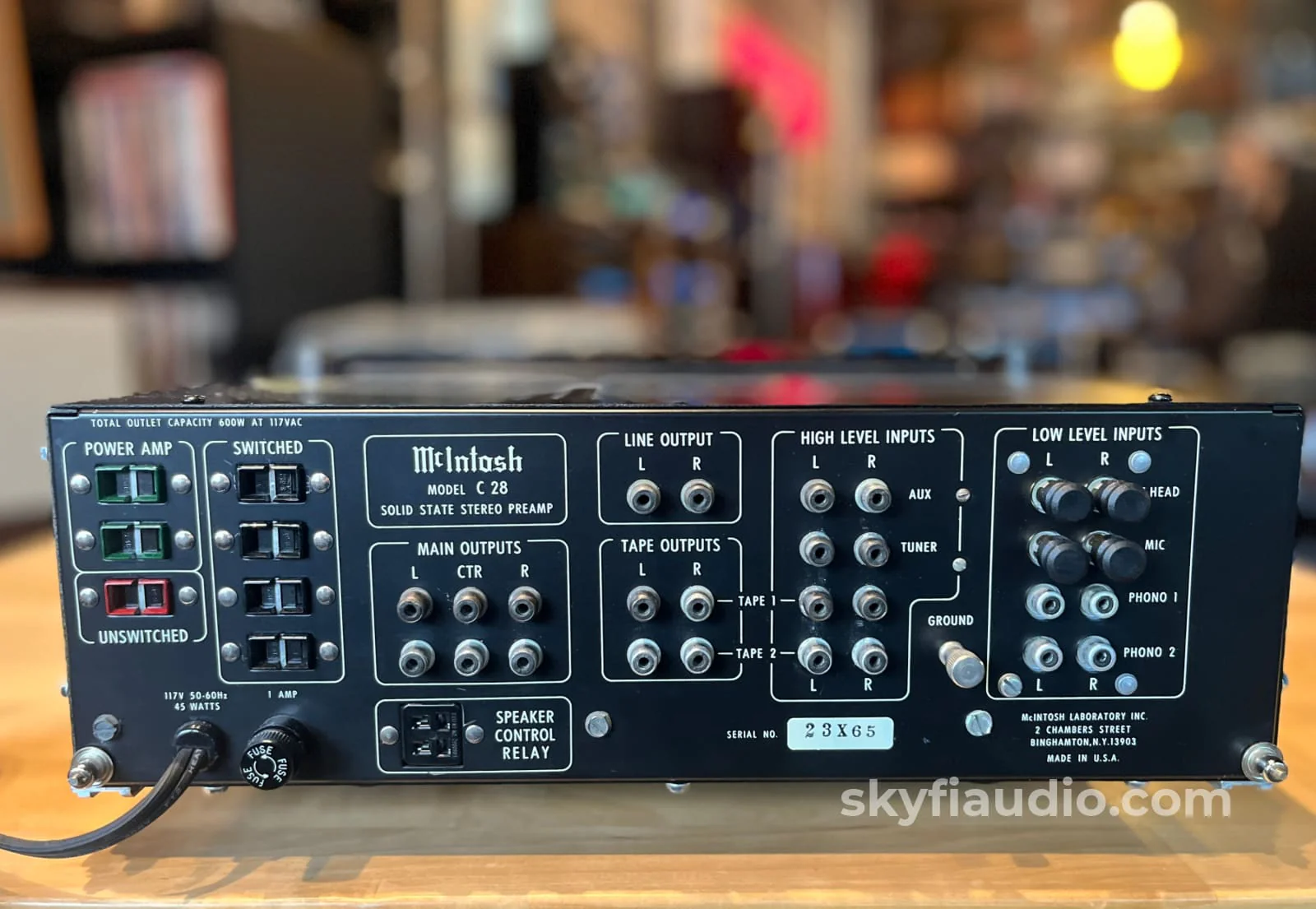
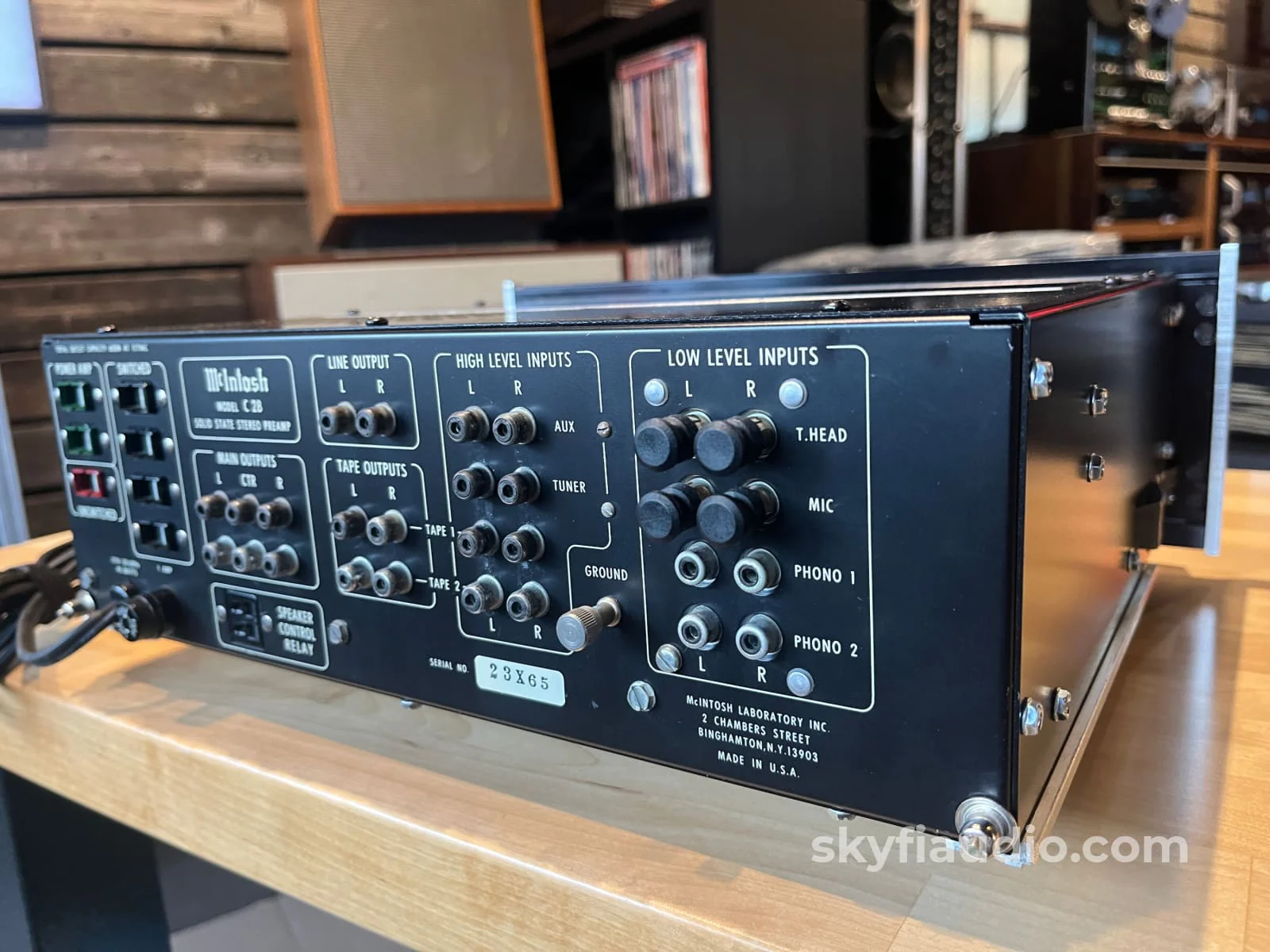
RCA High and Low Level Inputs, RCA Line Output, 7 Power outlets
General Sound:
Smooth, uncolored, undistorted natural and clean
Cosmetic Condition:
7/10 = Good. One or two minor scratches. Well Maintained. See our detailed rating description here.
Working Condition:
Working perfectly and tested in our lab and listening room.
Included:
Unit and Manual
Packing:
Original Manufacturers Packing
Specs:
Frequency response: 20 Hz to 20 kHz
Total harmonic distortion: 0.1%
Gain: 62 dB (MM), 20 dB (line)
Input sensitivity: 2.5mV (mic), 2mV (MM), 250mV (line)
Signal to noise ratio: 78 dB (MM), 90 dB (line)
Output: 250mV (line), 2.5V (Pre out)
Dimensions:
16" x 5.4" x 15"
Weight:
25 lbs.
Approximate Age:
1970
Link to Manual:
Click Here
Recommended Cables:
Kimber Kable - RCA Interconnects - Better
Kimber Kable - RCA Interconnects - Best
Kimber Kable - Phono Interconnects
Testing Process:
We start with a visual inspection of all internal components to make sure that there are no signs of heat stress or damage. Capacitors are checked for telltale signs of predictive failure including bulging, shrunken wrappers, or physical leakage. We also inspect the PCBs for discoloration from resistors or transistors that may have been running hot. On vintage units we often spot check select capacitors for value and ESR.
When we first power on a preamplifier we connect its RCA output to a Sencore PA81 Power Analyzer which simulates real world loading conditions and gives us an oscilloscope interface.
The first order of business is checking that the volume control works smoothly throughout its entire range with acceptable channel balance. This is accomplished by feeding a 1 KHz sine wave into one of the preamp’s line level inputs while monitoring the preamp’s output on an oscilloscope.
We then switch to a 1 KHz square wave to test the tone controls, loudness function, and filters where applicable. During this step we are watching for equal alteration of the test signal by both channels. This also helps us identify dirty controls that will need treatment.
Once the basic line stage functions are verified, we test each input individually. This is especially important for devices that use relays to select their sources. If the preamp is equipped with a phono stage we test that as well. We use an inverse RIAA filter which allows us to feed a reference test signal into the phono input with the proper RIAA equalization and level. A square wave or sine sweep is used to verify that the device’s phono stage is faithfully reproducing the RIAA curve. If the preamp under test has balanced inputs and/or outputs these are tested as well.
We finish up our bench testing with a listening test with our bench amplifier and reference speakers. During this test we check for hum or hiss that may not have shown up in earlier testing. We also check that all of the tone controls and filters perform as expected.
If the preamplifier has remote control functions these are also tested. Preamps with tube circuits or complicated power supply topologies are connected at our long term test rig for extended stress testing under real world conditions.

Description
General:
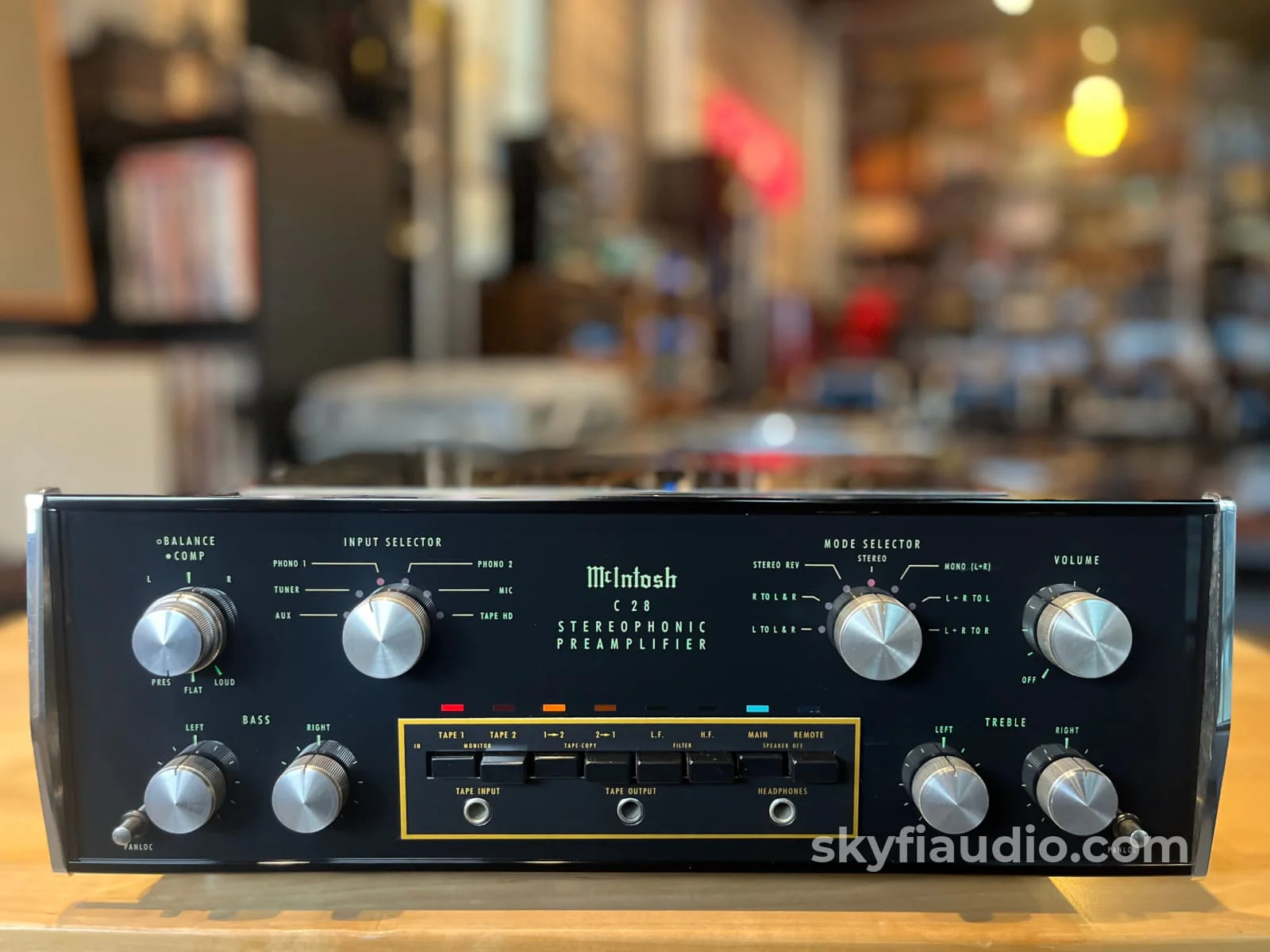
The C28 solid state preamplifier is a true McIntosh classic. It features the McIntosh vintage look and feel including a backlit glass faceplate, large polished control knobs, and satisfying push-buttons with LED's.
Controls are just what you need - an input selector, volume, balance, plus tone controls. The individual left and right channel tone controls are a nice plus.
Cosmetically it presents very nicely. The replacement glass faceplate is clean and the paintwork is without any deep scratches, rust, or wear.
The C28 is a crowd favorite from this era. It's easy to service, has a low noise floor, great vintage looks, and every feature we would want.
This particular C28 also has been serviced in 2023 giving the next owner piece of mind for long term reliability. The buttons and knobs feel super nice without any scratchiness. It sounded great in testing and at our bench.
We also ordered a fresh C28 double-shipping carton from McIntosh to ensure safe travels to its new home. Included with the unit will be its original print manual.
SkyFi Cosmetic Notes:
The glass on this C28 has been replaced. This affects the light diffusion slightly and changes overall the look of the front panel. The illumination has been converted to LED to improve light propagation with the new glass. The chassis is in very good condition overall besides some marking on the top cover. The RCA jacks are slightly tarnished.
SkyFi Technical Notes:
This C28 was serviced by Analog Sound Labs in 2023. The service included a replacement of all electrolytic and aging film capacitors on the PC Boards. Select power supply caps were replaced, controls cleaned, and any noisy transistors replaced. This unit has also received a replacement front glass panel and a new power cord.
All features were tested in our lab. The only notable issues that we identified was a channel imbalance in the volume control in the mid range. It tracks well for the first 30% of the control. Between the top apron output level knobs and the input attenuators on a matching McIntosh power amplifier, the gain relationships can be tweaked to move the comfortable listening range into the early part of the control for proper balance during normal use.
Brand Background:
McIntosh Laboratory is an American manufacturer of handcrafted high-end audio equipment based in Binghamton, New York. The company was founded in 1949 by Frank McIntosh. The company designs and produces audio amplifiers, stereo tuners and other consumer electronics products.
Ownership:
Second Owner
Connections:
RCA High and Low Level Inputs, RCA Line Output, 7 Power outlets
General Sound:
Smooth, uncolored, undistorted natural and clean
Cosmetic Condition:
7/10 = Good. One or two minor scratches. Well Maintained. See our detailed rating description here.
Working Condition:
Working perfectly and tested in our lab and listening room.
Included:
Unit and Manual
Packing:
Original Manufacturers Packing
Specs:
Frequency response: 20 Hz to 20 kHz
Total harmonic distortion: 0.1%
Gain: 62 dB (MM), 20 dB (line)
Input sensitivity: 2.5mV (mic), 2mV (MM), 250mV (line)
Signal to noise ratio: 78 dB (MM), 90 dB (line)
Output: 250mV (line), 2.5V (Pre out)
Dimensions:
16" x 5.4" x 15"
Weight:
25 lbs.
Approximate Age:
1970
Link to Manual:
Click Here
Recommended Cables:
Kimber Kable - RCA Interconnects - Better
Kimber Kable - RCA Interconnects - Best
Kimber Kable - Phono Interconnects
Testing Process:
We start with a visual inspection of all internal components to make sure that there are no signs of heat stress or damage. Capacitors are checked for telltale signs of predictive failure including bulging, shrunken wrappers, or physical leakage. We also inspect the PCBs for discoloration from resistors or transistors that may have been running hot. On vintage units we often spot check select capacitors for value and ESR.
When we first power on a preamplifier we connect its RCA output to a Sencore PA81 Power Analyzer which simulates real world loading conditions and gives us an oscilloscope interface.
The first order of business is checking that the volume control works smoothly throughout its entire range with acceptable channel balance. This is accomplished by feeding a 1 KHz sine wave into one of the preamp’s line level inputs while monitoring the preamp’s output on an oscilloscope.
We then switch to a 1 KHz square wave to test the tone controls, loudness function, and filters where applicable. During this step we are watching for equal alteration of the test signal by both channels. This also helps us identify dirty controls that will need treatment.
Once the basic line stage functions are verified, we test each input individually. This is especially important for devices that use relays to select their sources. If the preamp is equipped with a phono stage we test that as well. We use an inverse RIAA filter which allows us to feed a reference test signal into the phono input with the proper RIAA equalization and level. A square wave or sine sweep is used to verify that the device’s phono stage is faithfully reproducing the RIAA curve. If the preamp under test has balanced inputs and/or outputs these are tested as well.
We finish up our bench testing with a listening test with our bench amplifier and reference speakers. During this test we check for hum or hiss that may not have shown up in earlier testing. We also check that all of the tone controls and filters perform as expected.
If the preamplifier has remote control functions these are also tested. Preamps with tube circuits or complicated power supply topologies are connected at our long term test rig for extended stress testing under real world conditions.